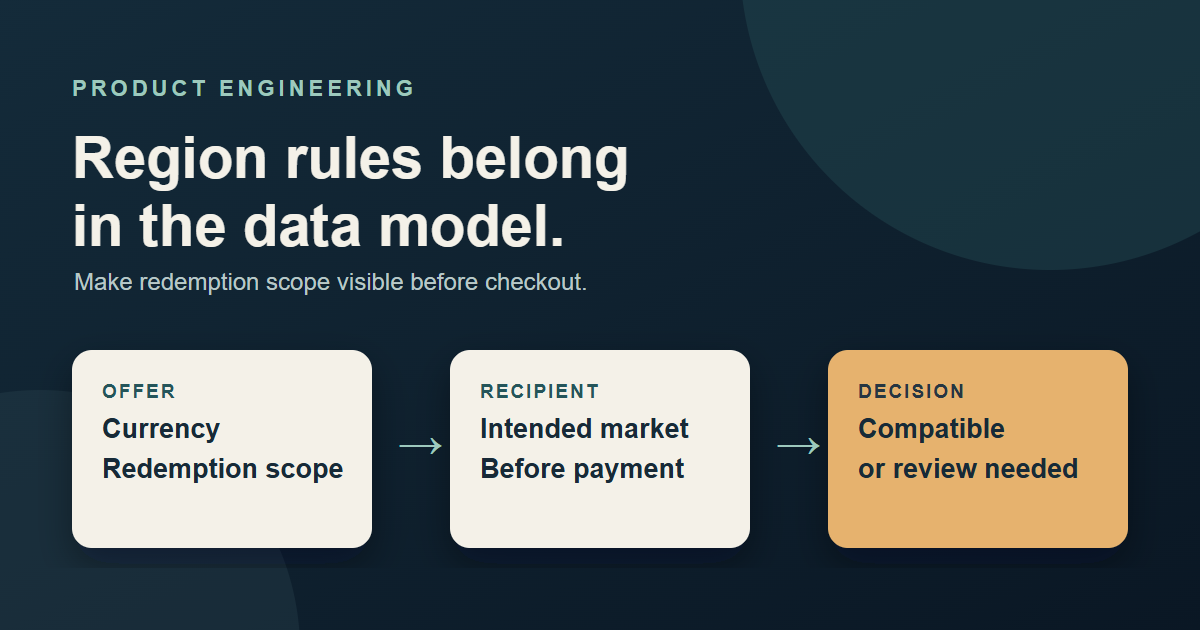
A gift card can look perfectly valid at checkout and still be wrong for the person receiving it. The usual explanation is “regional restrictions,” tucked into a tooltip or a paragraph near the bottom of the page. That is too late. If a product has a rule that can make a purchase unusable, the rule belongs in the product model and the buying flow.
Make the constraint a first-class field
I would model a card offer with explicit fields for its selling market, currency, denomination, and redemption scope. Those are different things. A card sold in one country may be priced in one currency and redeemable in a different set of places. A single region: "US" string cannot explain all of that.
type GiftCardOffer = {
  id: string;
  issuer: string;
  denomination: number;
  currency: string;
  sellingMarket: string;
  redemptionMarkets: string[];
  regionRuleSource: string;
  regionRuleCheckedAt: string;
};
The last two fields matter because these rules can change. If a team cannot say where a restriction came from or when it was last checked, it should be cautious about showing a confident green “works here” badge.
Validate before payment, not after delivery
The UI can ask where the recipient expects to redeem the card, then compare that answer with the offer. If the buyer does not know, say so plainly and let them inspect the rule before buying. Do not quietly guess from an IP address: travel, VPNs, and cross-border gifting make that a poor proxy for the recipient.
The same rule should drive the product page, cart warning, and final confirmation. When three screens maintain three versions of the same restriction, they drift. A small shared function is easier to test than scattered conditional copy:
function canRedeemIn(offer: GiftCardOffer, market: string) {
  return offer.redemptionMarkets.includes(market);
}
That function is deliberately boring. The hard work is keeping redemptionMarkets accurate and making “unknown” a real state rather than treating it as “yes.”
Show the buyer the consequence
“Region restricted” is technically correct and practically vague. A useful message says what the buyer can do next: “This card is listed for redemption in Market A. Your recipient selected Market B. Check the issuer terms or choose another card.” It should appear while the buyer can still change their mind.
I would also test the cases that are easy to miss: a recipient with no selected market, a card with an unverified rule, two offers from the same issuer with different rules, and a gift sent across borders. Those cases reveal whether the system understands the restriction or merely displays a label.
This is one of the small product details I watch while writing about digital gifts for CardNaro. A clear rule is more useful than a polished checkout animation when the gift has to work for someone on the other side of the screen.
About the author
- Independent, source-first explainers about gift cards, consumer records, and digital-value products.
Comments
Join the discussionNo comments yet. Be the first to comment.